
Industrial safety barriers
Custom safety barriers, bollards and metalwork
We manufacture and install safety barriers, bollards, rack barriers, mesh panels and metal components for warehouses and industry. Our work includes metal fabrication, welding and powder coating.
Storage solutions
Protection for racking, aisles and equipment
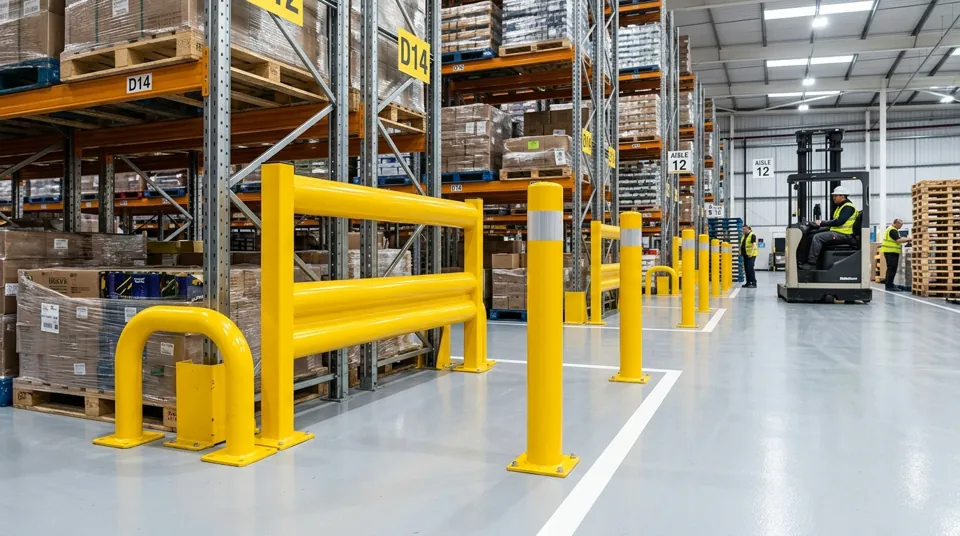
To protect against forklift impacts, we manufacture impact barriers and guards from steel tubes and heavy-wall sections. They are installed beside exposed rack uprights and other parts of the facility that need protection.
We adapt the dimensions, materials, finish (hot-dip galvanising or powder coating in a high-visibility yellow-and-black combination) and installation method (anchoring into concrete) to the project and site conditions.
Protective and fabricated metal elements
- Rack upright corner guards: Guards for rack ends and individual uprights; material, dimensions and installation method are specified for the project.
- Side safety barriers (impact guards): Single and double barriers at the ends of racking rows to reduce the risk of damage when forklifts turn.
- Protective bollards: Fixed and flexible steel bollards protecting pedestrian doors, electrical cabinets and machinery.
- Mesh panels and partitions: Rear and side protective mesh on pallet racking to reduce the risk of goods falling into aisles. Panel selection depends on the dimensions and type of goods.
- Custom metalwork: Fabrication of metal ramps, safety gates, walkways and purpose-made brackets to drawing.
Details and applications
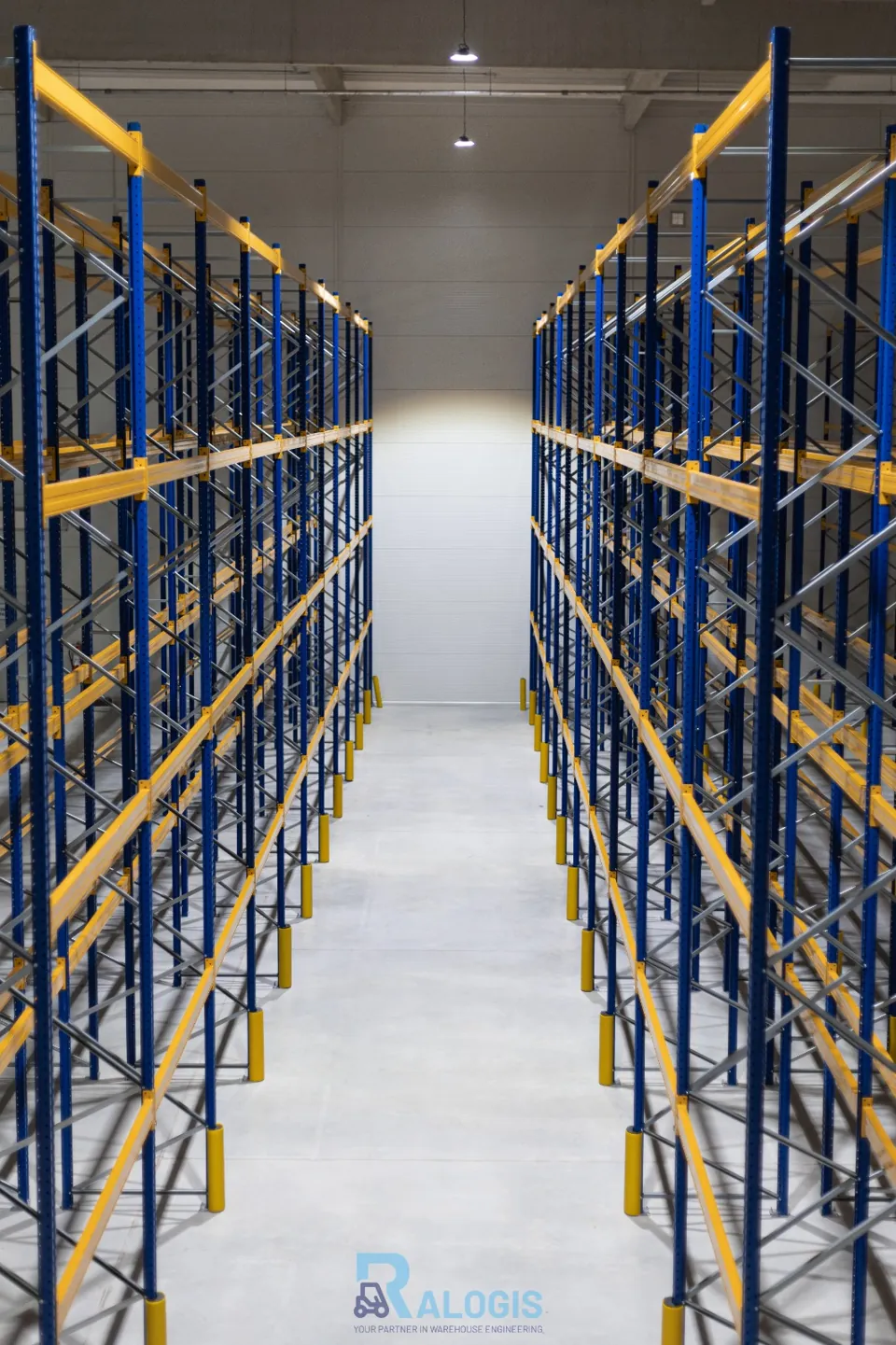
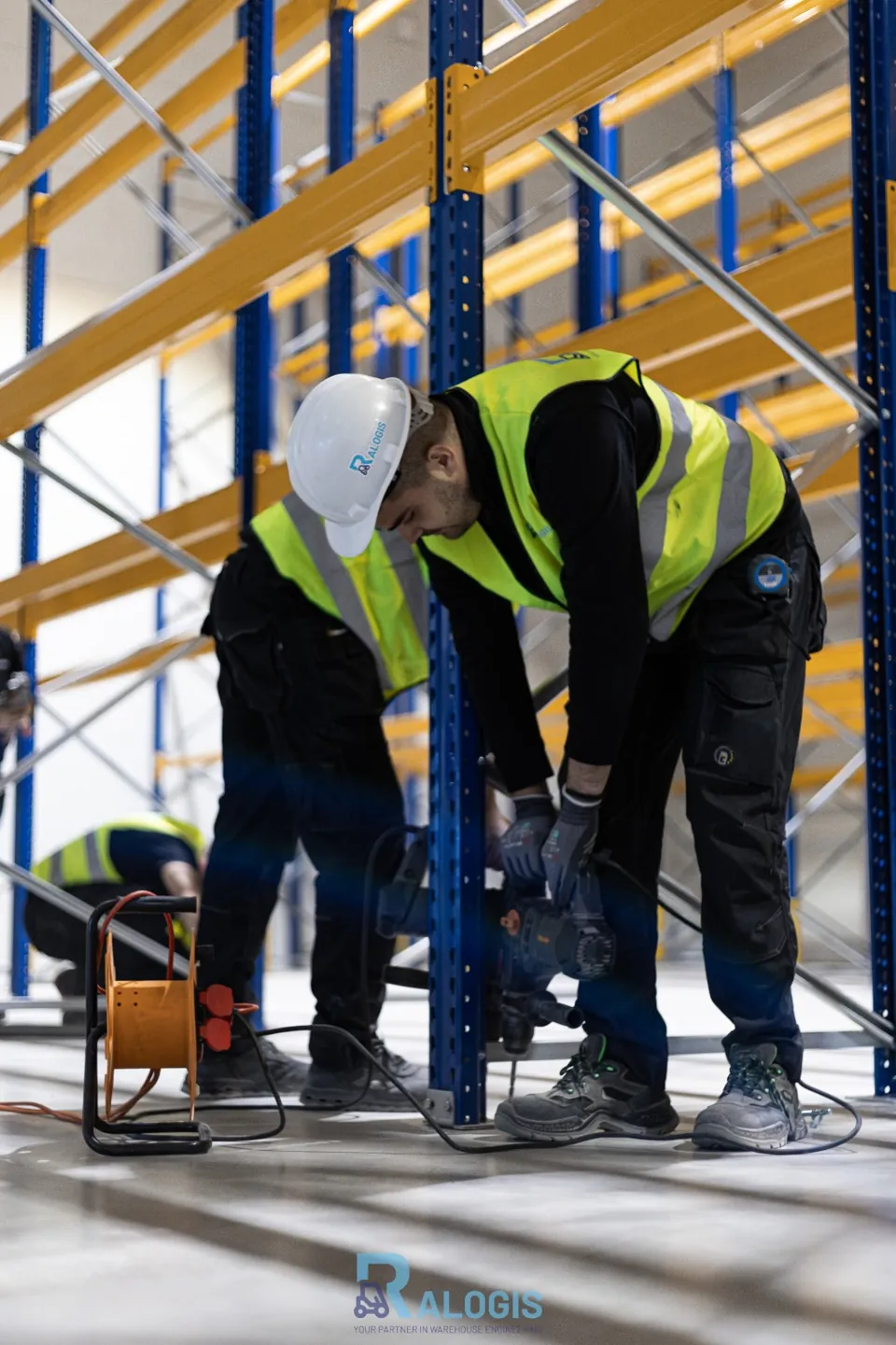
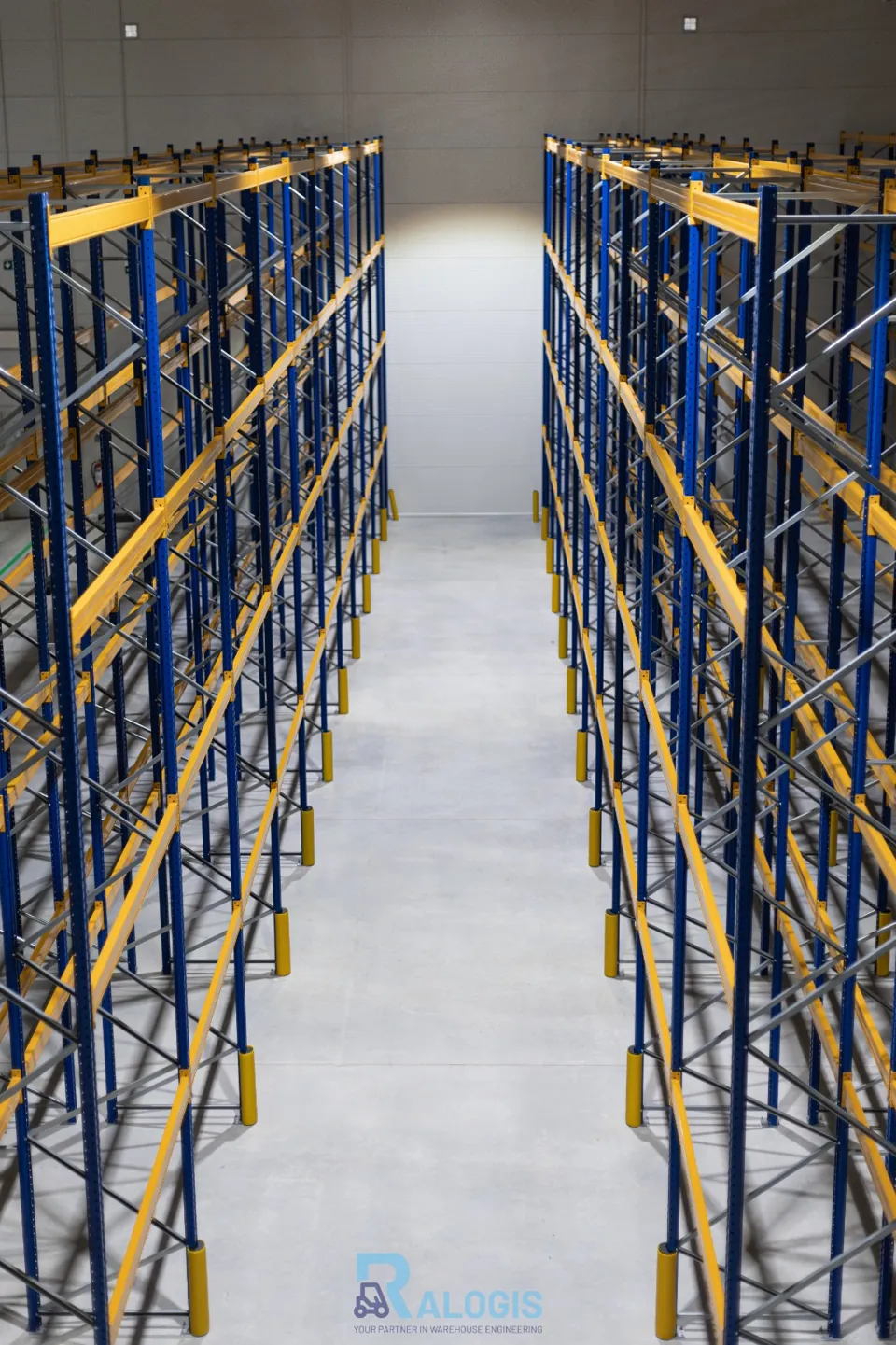
Examples of site-installed protection
Before requesting a quotation
Questions before you enquire
How is rack and aisle protection selected?
By reviewing exposed uprights, rack ends, forklift routes and pedestrian access. Protection dimensions and installation positions must allow enough working space.
Do you make custom metal protection?
Yes. Dimensions, materials and finishes are specified for the project. Send measurements, photographs and a description of the installation location.
What needs checking before installation?
The floor, anchoring positions, available space and pedestrian and vehicle movements. Fixings are selected for the site conditions.